


The Home Robot That Started the Conversation
Stephen Witt recently wrote an interesting piece in The New Yorker focusing on Neo, the home humanoid from 1X Technologies. He asks an important question: Are humanoid robots actually ready to leave the lab? Along the way, he explains why many experts remain cautious. While Neo can autonomously perform relatively simple tasks such as opening doors, retrieving objects and turning off lights, more complex household chores still rely heavily on human teleoperators working remotely.

Witt isn’t the first to report on Neo’s limitations. Last fall, Joanna Stern from the Wall Street Journal observed that virtually everything she watched Neo accomplish was guided by a skilled human operator.
1X presents this as a feature, not a flaw. The company openly embraces teleoperation as part of Neo’s training strategy. Human experts can remotely step into the robot, teach it new skills and generate the real-world data needed to make future versions more autonomous.
That approach can work, of course, provided early adopters are willing to purchase a product that is still learning. If you take possession of a 2026 Neo, you are becoming part of the robot’s training process. For some, that might be thrilling. But, for someone who has bought into the hype of a “robot butler,” they might be very disappointed.
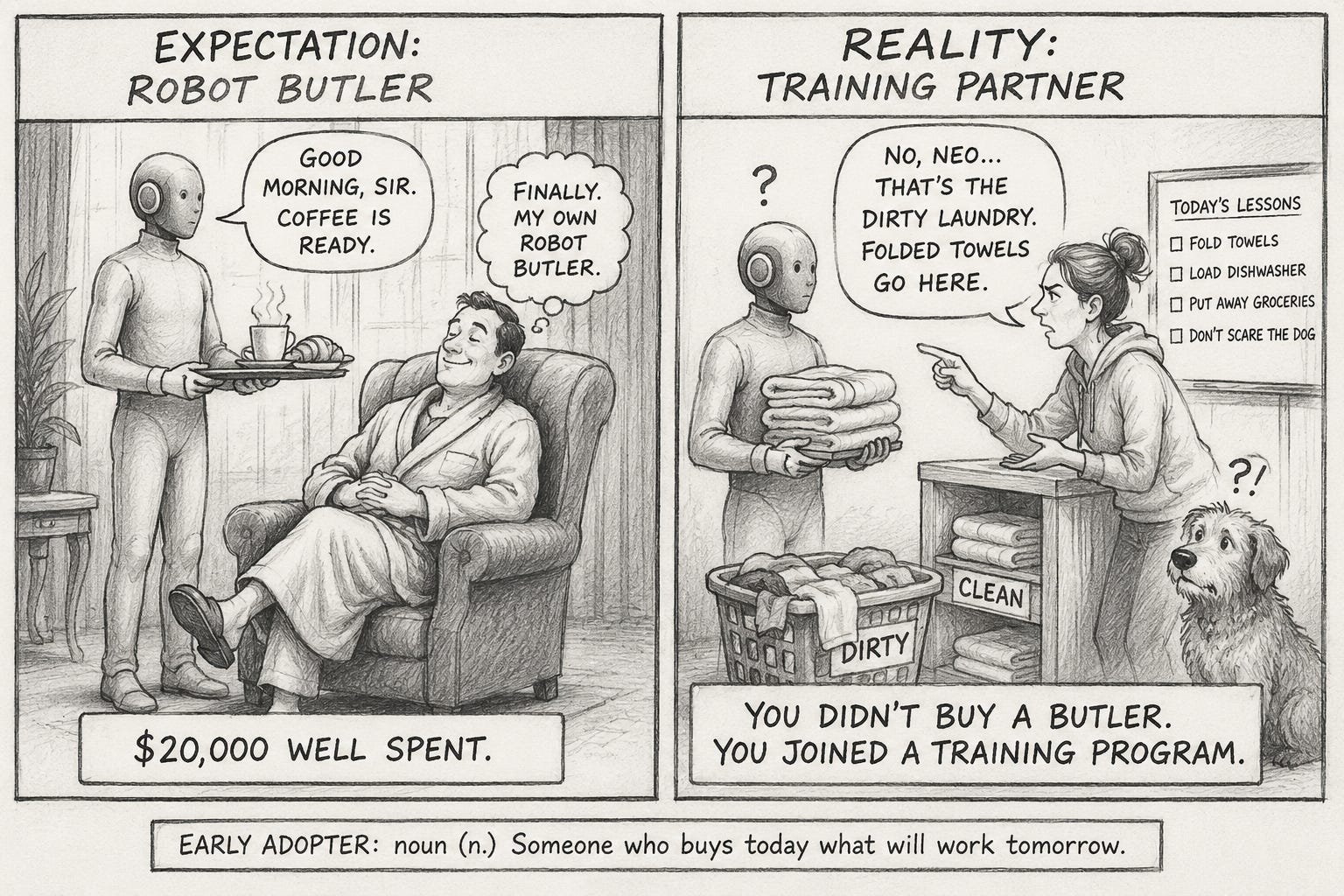
Reading Witt’s article got me wondering where the rest of the humanoid robotics industry actually stands.
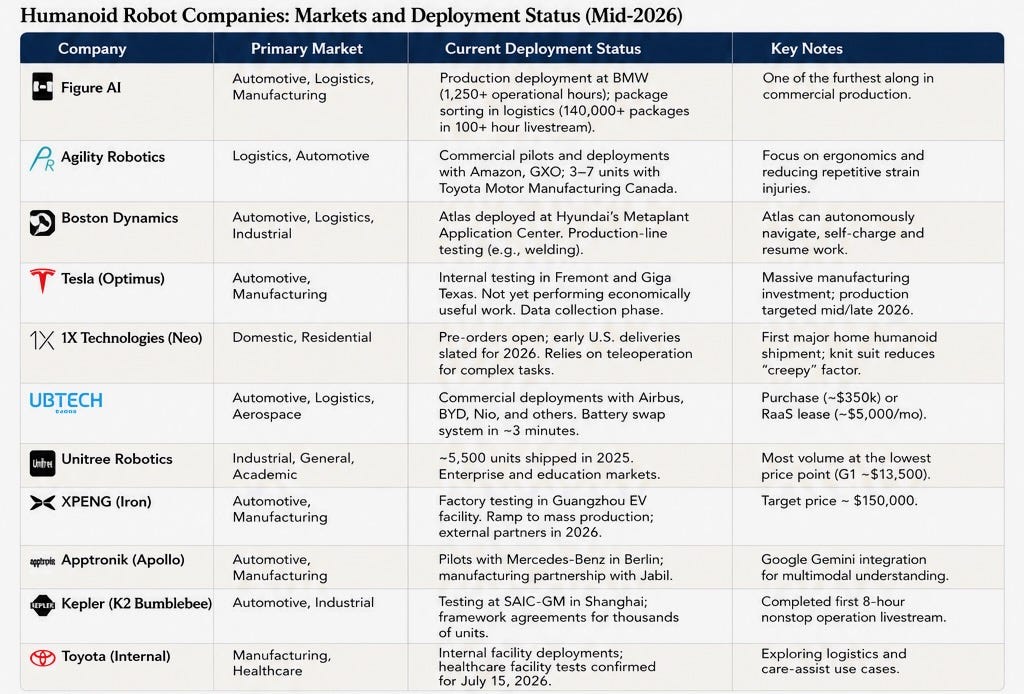
If Neo is one of the most advanced home robots in development today, where are Figure, Tesla, Agility, Boston Dynamics, Unitree, Apptronik and the others?
Not All “Deployments” Are Equal
The word deployment has become one of the most overused terms in robotics.
A robot performing a choreographed demonstration is deployed in a very different sense than one working an eight-hour shift for a paying customer.
Today, humanoid robots generally fall into three categories:
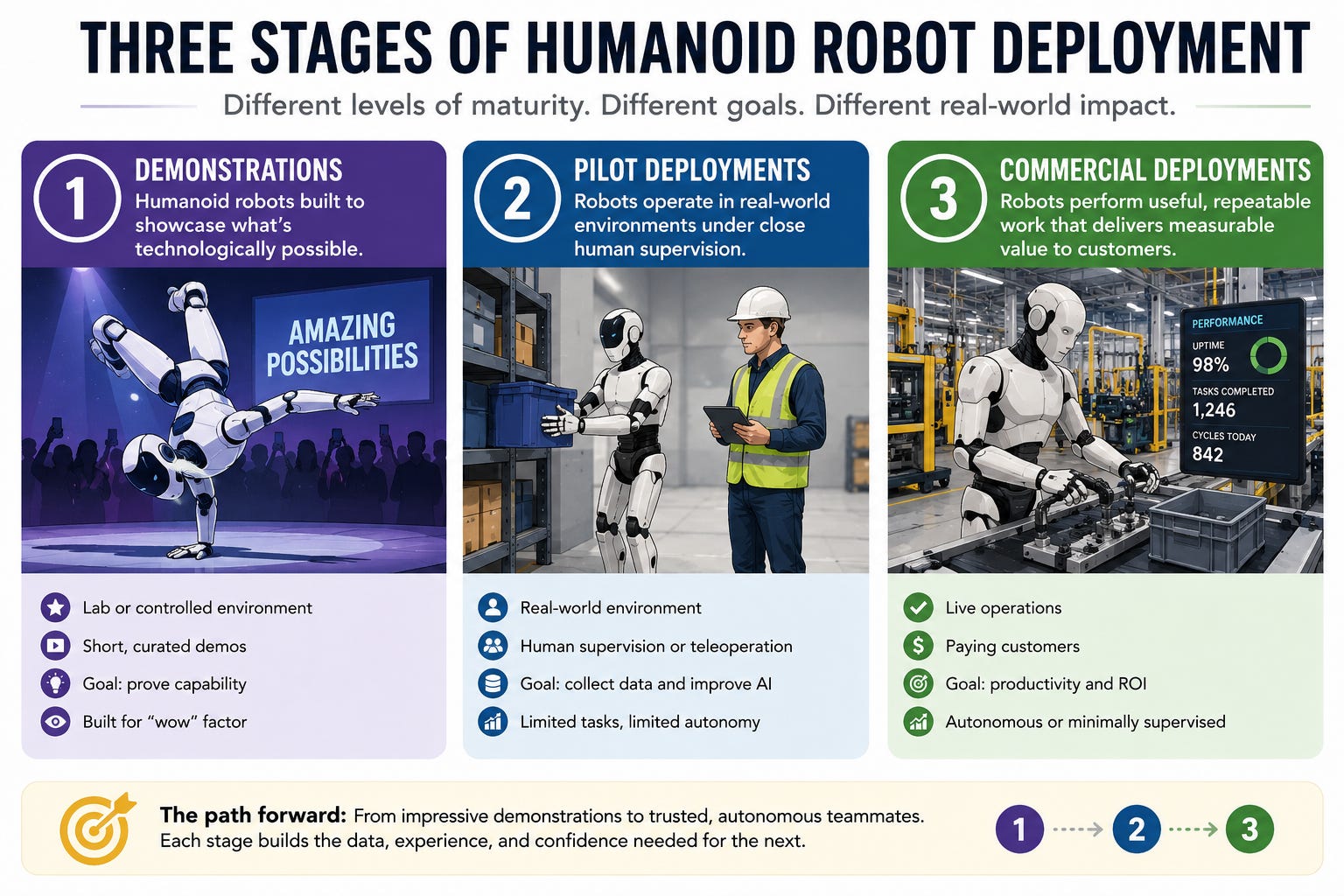
Rather than asking whether humanoids are “ready,” a better question is ready for what? A robot designed to impress investors has very different requirements than one expected to work beside people every day. As the industry matures, success will be measured less by viral demonstrations and more by reliability, autonomy and economic value.
Factories Are Leading the Way
The strongest evidence of commercial progress is coming from structured industrial environments.
Figure AI has emerged as one of the industry’s leading examples. At BMW’s Spartanburg plant, Figure robots have accumulated more than 1,250 operational hours while assisting vehicle production.
The company’s latest Figure 03 platform also completed a livestream exceeding 100 continuous hours while sorting more than 140,000 packages. This demonstration proved very effective to show reliability.
Digit from Agility Robotics is working with customers including Amazon, GXO and Toyota Motor Manufacturing Canada. Rather than replacing entire assembly lines, Digit performs repetitive material-handling tasks intended to reduce ergonomic injuries and free workers from physically demanding jobs.
Boston Dynamics crossed an important milestone this year when its all-electric Atlas humanoid entered Hyundai’s Metaplant Application Center in Georgia. Atlas can autonomously navigate the facility, recharge itself and return to work, marking the company’s transition from decades of robotics research toward commercial deployment.
These robots aren’t replacing entire workforces.
They are replacing specific tasks.
Tesla’s Different Strategy
Tesla’s Optimus remains the industry’s highest-profile humanoid robot, but its commercialization strategy differs from many competitors.
The company is investing billions of dollars to build manufacturing capacity that could eventually produce robots at enormous scale. Yet Elon Musk has acknowledged that the Optimus robots currently operating inside Tesla factories are still part of an ongoing research and data collection effort rather than performing economically valuable factory work.
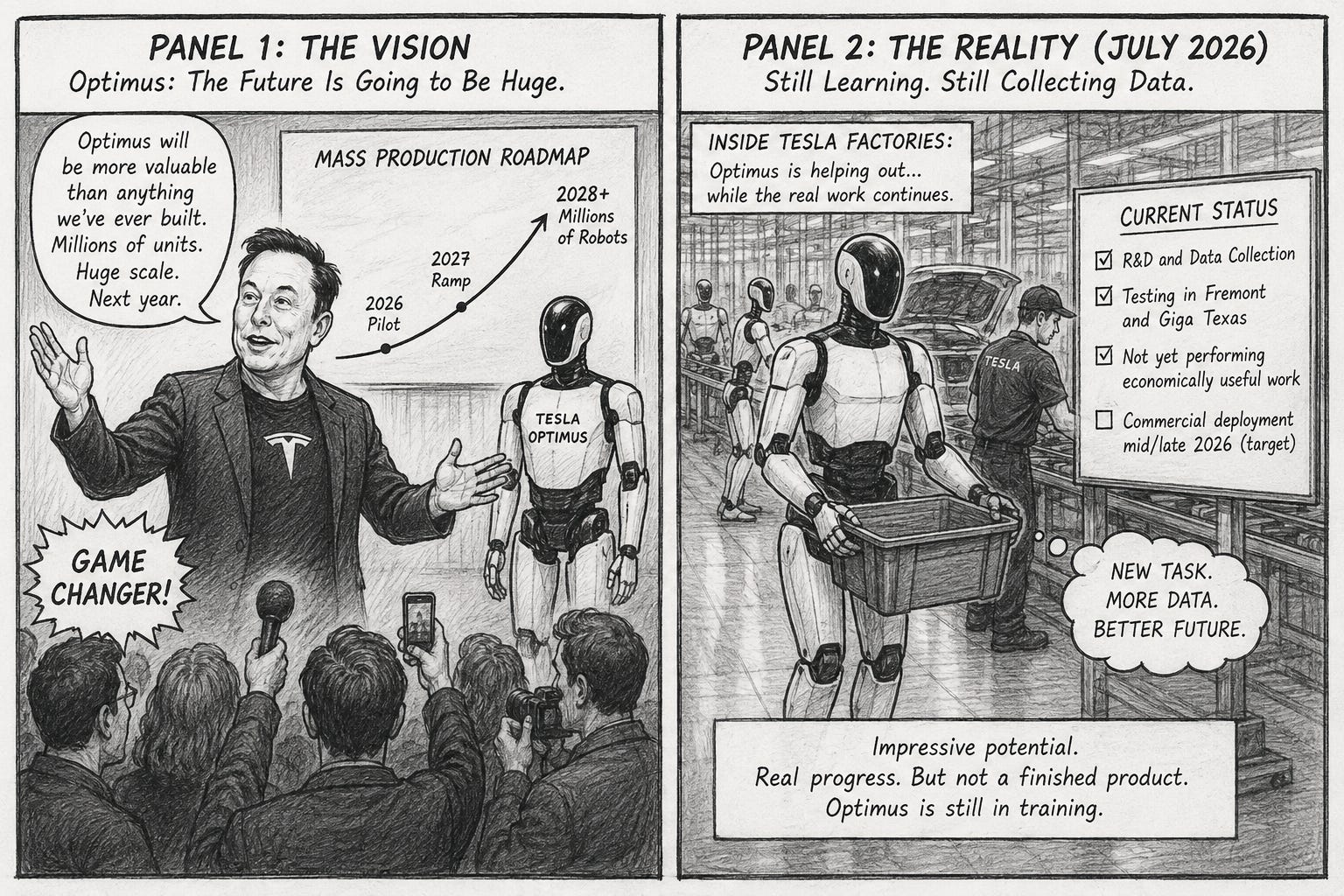
Today, Optimus remains largely an internal research platform rather than a commercial product. Tesla is using deployments inside its own factories to collect the data needed to improve autonomy.
Figure has taken a different approach. While continuing to improve autonomy, it has simultaneously ramped production, deployed robots at BMW, and begun generating commercial operating experience in customer environments.
Both companies are still training their robots. Figure is simply doing more of that training in the field with commercial customers.
The industry’s biggest challenge is no longer building humanoids.
It’s making them reliable enough to perform useful work day after day in the real world.
Why Homes Are So Much Harder
The industry’s biggest challenge is no longer building humanoids.
It’s collecting enough high-quality real-world data to make them reliable.
There is no robotics equivalent of the public internet.
That helps explain why factories are advancing faster than homes. Industrial environments are engineered for consistency. Lighting is predictable. Workstations are standardized. Parts arrive in known locations. Robots repeat the same workflows thousands of times under carefully controlled conditions.
Homes offer none of those advantages.
Furniture gets rearranged. Children leave toys on the floor. Pets wander into rooms. Or, in my house, the pet wanders into the room and leaves toys everywhere.
Frankly, I’ve always suspected my cattle dog would be the ultimate benchmark for Physical AI. Heelers are relentless about herding anything that moves. How would Neo respond when a 40-pound dog suddenly decided the robot belonged in the kitchen?
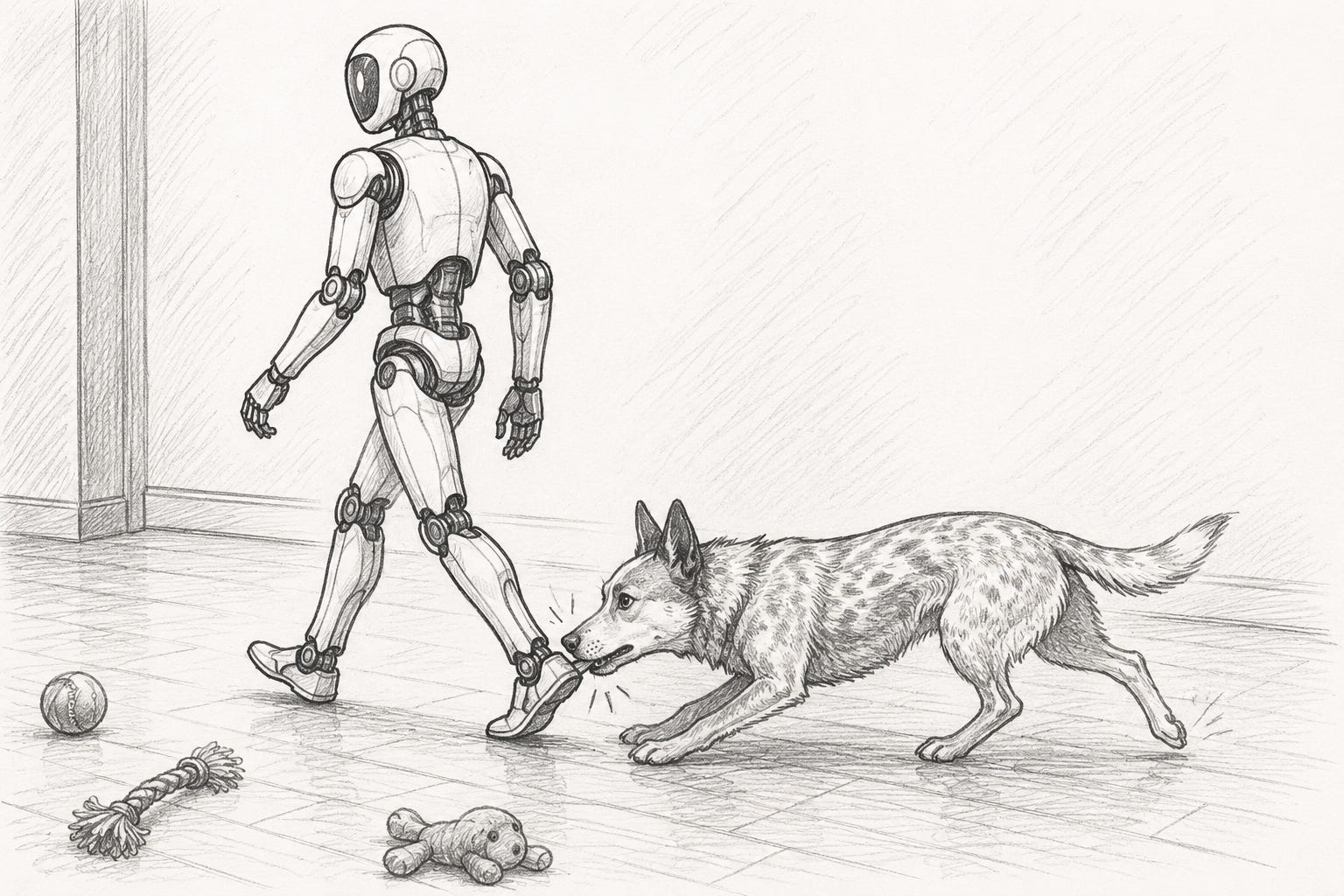
That’s why teleoperation remains such an important part of 1X’s strategy. Every remotely assisted task becomes additional training data, gradually expanding the robot’s ability to operate independently. Although, I’m not sure a remote teleoperator is a match for Rosie.
The Race for Real-World Experience
If there’s one takeaway from all of this, it’s that the question has changed.
We no longer need to ask whether humanoid robots are possible.
They are.
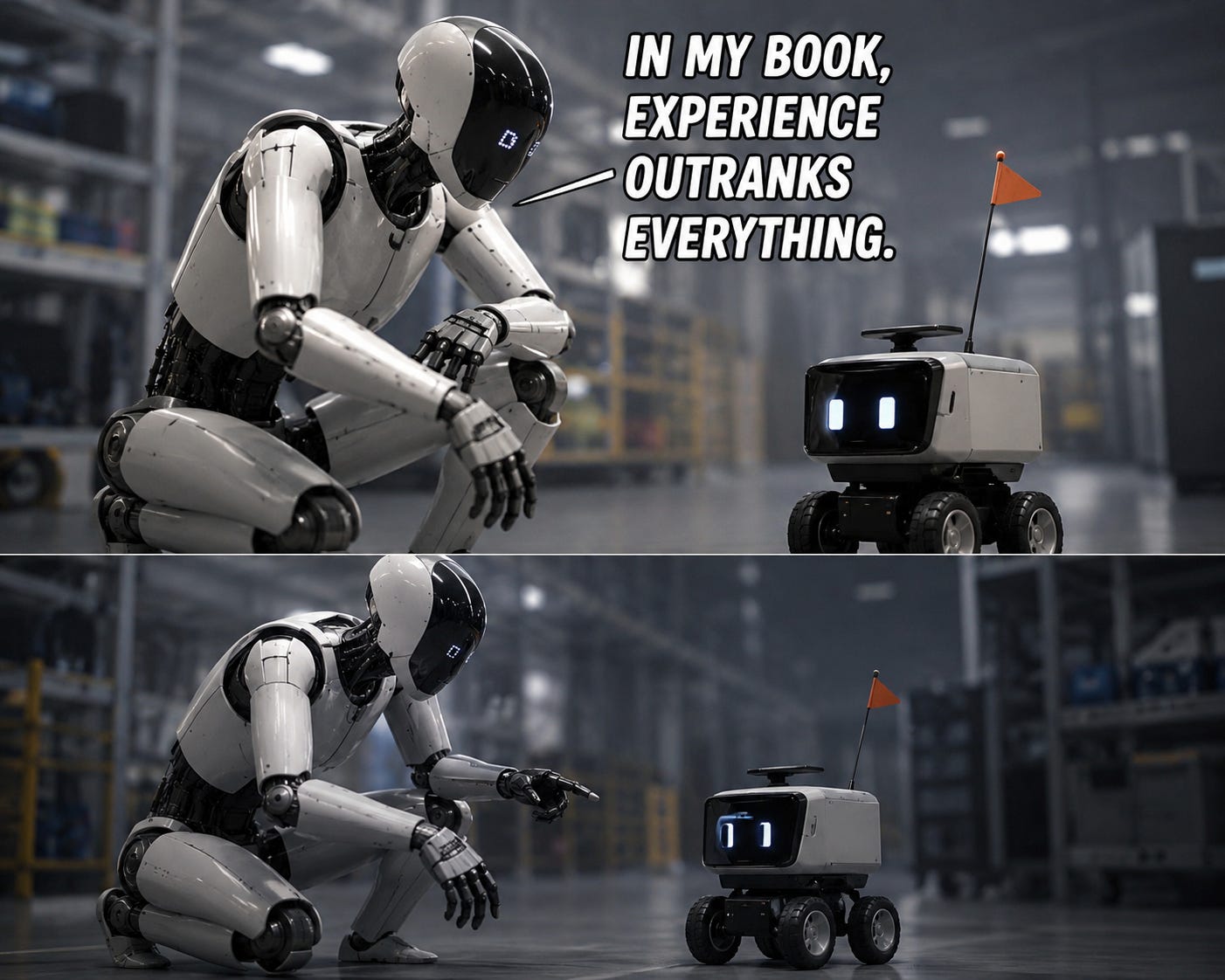
The question now is which companies can transform millions of hours of real-world experience into reliable autonomy the fastest.
In robotics, experience is becoming the ultimate competitive advantage.
Additional Reading for Inquisitive Minds:
Abdullahi, Aminu. “1X’s $20K Robot Targets US Homes in 2026, Aims to Reduce the ‘Creepy’ Factor.” eWeek, April 27, 2026.
Baldauf, Ulrich. “5 Humanoid Robot Challenges Blocking Production in 2026.” There’s A Robot For That, June 8, 2026.
Bank of America Institute. Physical AI, Part 2: Humanoid Robots. March 12, 2026.
“Domestic Humanoids: The Dawn of Physical AI.” 1X Technologies, June 29, 2026.
“Humanoid Robot Deployment Report: Latest Real-World Milestones (June 2026).” Humanoid Applications, June 21, 2026.
“Industry Insights: Humanoids and Physical AI at Automate 2026.” Automate.org.
New Market Pitch Team. “Tesla Optimus Deployment Tracker (2026).” April 22, 2026.
Shannon, Matt. “Robots Are Ready. But Where Do You Start?” Field Notes from the Future, Deloitte Consulting LLP, July 1, 2026.
Singh, Ranveer, et al. “Predicting AI Maturity and Commercial Readiness of Humanoid Robotic Systems: A Machine Learning Analysis of The Global Humanoid Robotics Intelligence Dataset 2026.” IJIRT, Vol. 13, No. 1, June 2026.
Torka, Benedikt. “BMW Group Advances the Use of Physical AI in Production with Figure 03 Project in Spartanburg.” BMW Group PressClub Global, June 25, 2026.
Witt, Stephen. “Are Humanoid Robots Ready to Be Deployed?” The New Yorker, July 6 & 13, 2026.
Figure03 blog. Ramping Figure 03 production. April 29, 2026.
Editor’s Note: Today’s podcast was created using Google’s NotebookLM technology, using the sources above as the research basis for the “notebook.”
#robotics #humanoids #physicalai


