
Someone Gets Paid To Teach Robots to Fold Laundry
Why Toyota’s new paper on robot dexterity is more about elder care than engineering.

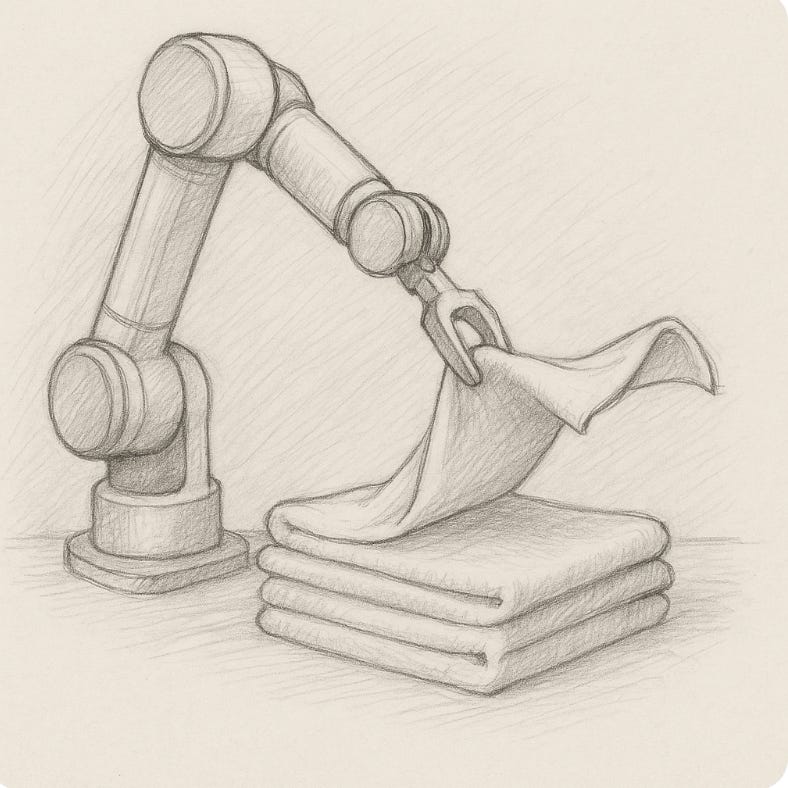
It Slices and It Dices.
Toyota’s latest robot video dropped alongside a compelling research paper on Large Behavior Models (LBMs)—a foundation-style policy model for robots trained to do hundreds of tasks. The video features real robots folding cloth, cutting vegetables, pouring liquids, and placing objects with surprising grace. No simulation puffery. No demo-only sleight of hand. Just real-world trials with real robots.
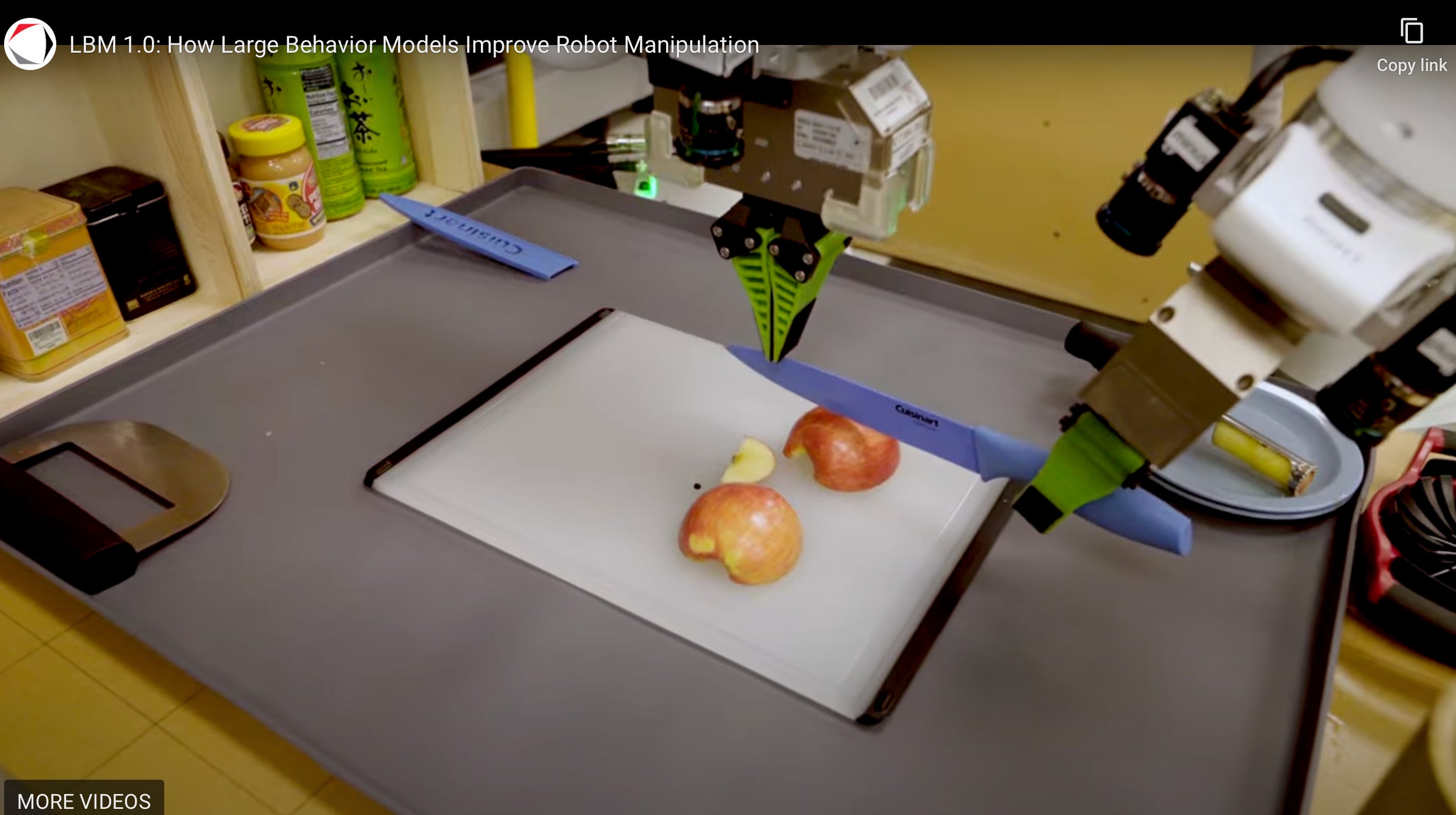
This is part of Toyota’s long game. And yes, they’re still a car company—but in Japan, where one in three people will be over 65 by 2035, they’ve been quietly shifting from carmaker to full-spectrum mobility provider. The implications are enormous: robots that can safely assist with daily tasks like preparing meals, folding laundry, or helping someone dress could radically change elder care, home assistance, and independence in aging societies.
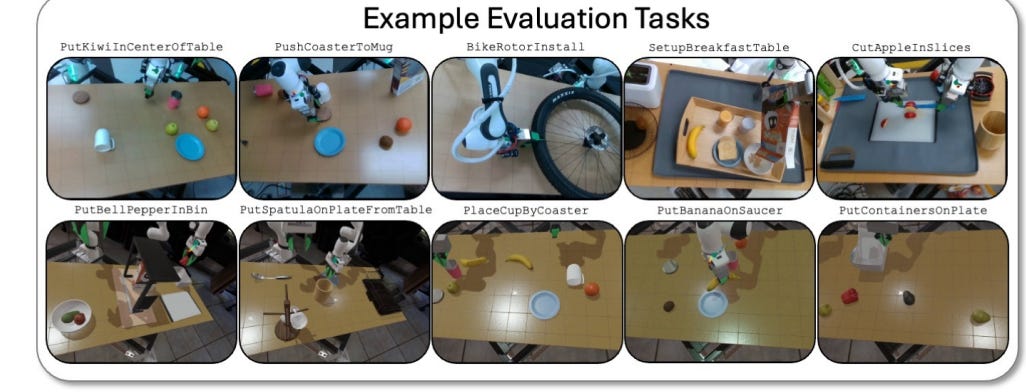
TRI (Toyota Research Institute) isn’t trying to build a humanoid butler. They’re building robotic capabilities that matter: dexterity, safety, and generalization. Their latest research shows that training robots on many tasks—not just one—leads to better performance, better adaptability, and faster learning. Think GPT, but for robotic hands.
Robots folding towels. A job someone actually has.
Meanwhile, I’m over here wondering if it’s too late to apply.
I’m just a regular parent raising a roboticist, arguing about folding algorithms over dinner. Nothing weird here. Just another towel-folding debate in the American household.
▶️ Watch the video:
▶️ Read the paper: https://arxiv.org/abs/2507.05331
Audio Note: The accompanying audio was created using Google DeepMind’s NotebookLM and is based directly on the Toyota paper.
#ToyotaResearch, #LargeBehaviorModels, #Robotics, #RobotLearning, #DiffusionPolicy, #TRI, #FoundationModels, #DexterousManipulation, #EmbodiedAI, #AIandRobots