

When I first encountered Kiwibot, the company was best known for its small delivery robots rolling around college campuses.
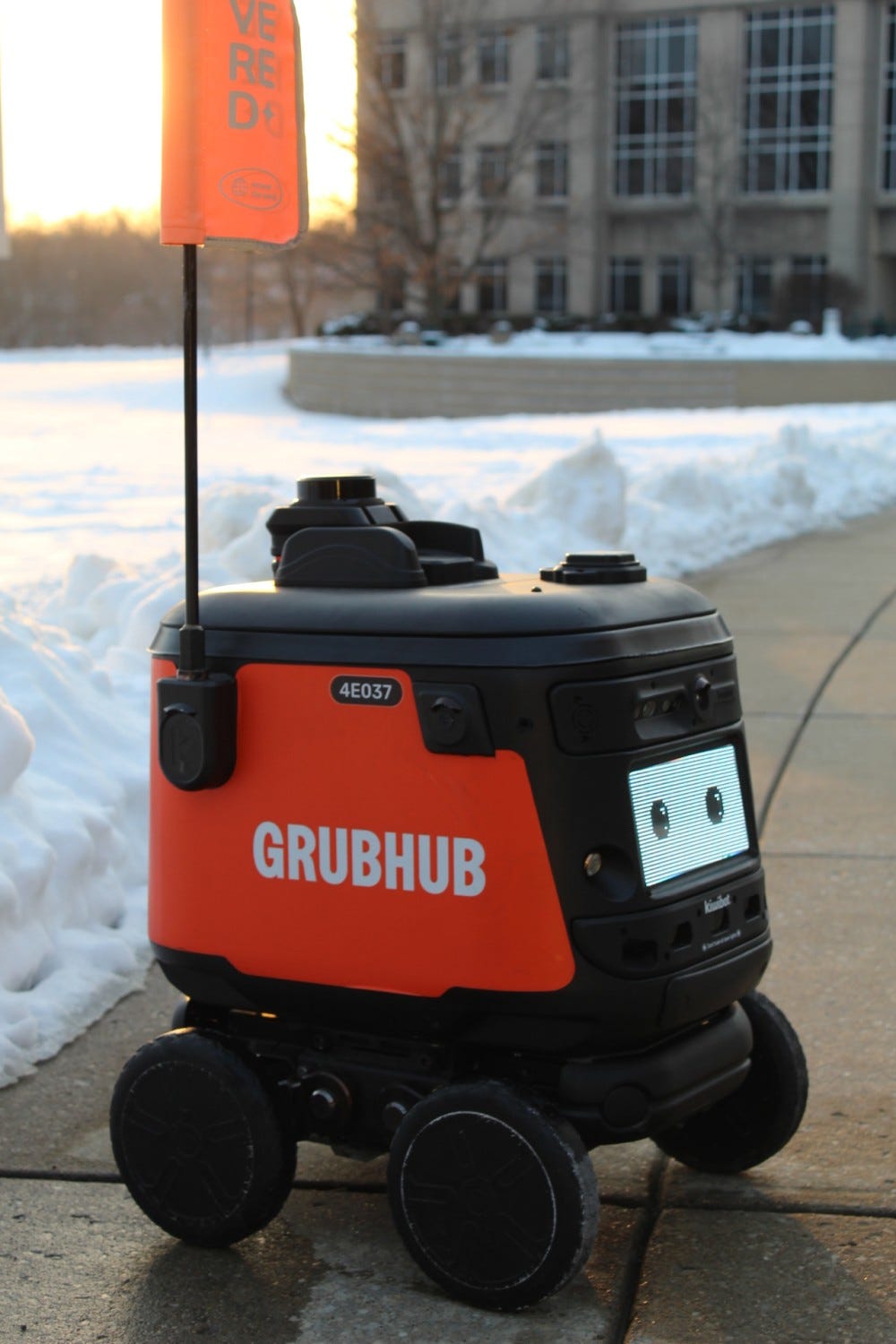
I saw them again at NVIDIA GTC this year, where the Kiwibots were wandering around Plaza de Cesar Chavez Park and encouraging people to scan a QR code for a gift. The video below has no audio, but it’s like a “Where’s Kiwi?” challenge to see how many you can spot in just 30 seconds. (There were a lot of them roaming the park.) I enjoyed having them around.
Since May of 1995, Kiwibot has grown into Robot.com, and the company’s scope and ambition have expanded considerably.
I recently sat down with Robot.com co-founder and CEO Felipe Chavez Cortes to talk about his robots and the evolution from Kiwibot.
From gaming to robots
First, though, I asked a question I have asked many founders:
“Tell me your origin story.”
The question brought a smile to Chavez Cortes.
He grew up in Colombia and says his first real encounter with technology came through World of Warcraft. At 13, he had a technical role helping set up Spanish-language servers for the game.
“That kind of blew my mind,” he told me, because it showed him that “you can actually build something that can help people with very low resources.”
He later founded a food-delivery startup in Colombia, sold it and finished college.
“Did that check mark for my parents,” he joked.
In 2017, Chavez Cortes joined the Global Founders Program at UC Berkeley, where the team created an early food-delivery robot. UC Berkeley’s SkyDeck Fund became an early institutional investor.
College campuses became an ideal proving ground.
Students wanted the convenience of delivery, Chavez Cortes said, while campuses offered a more controlled environment than city streets.
“It also allowed us to get better and faster feedback on the product,” he said. “And then we iterated from there.”
That experience would eventually push the company well beyond food delivery.
From Kiwibot to Robot.com
As customers began asking for different kinds of robots, the name Kiwibot increasingly described only one part of what the company was becoming.
“Our customers started to request new types of robots,” Chavez Cortes said. As customers began asking for different kinds of robots, the company began looking beyond campus delivery to other sectors and environments.
Today, Robot.com is developing several different robot types.
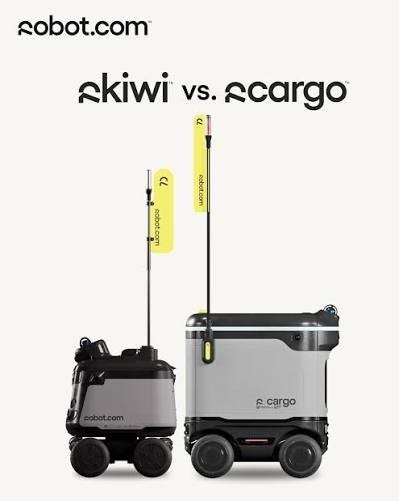
R-Kiwi remains focused on delivery. R-Cargo is designed for industrial and warehouse environments.
In June, Robot.com commercially launched R-Noid, a manipulation robot designed for repetitive jobs including packing, picking, folding and restaurant assistance. The company says R-Noid can be deployed under a Robot-as-a-Service model within eight to twelve weeks.
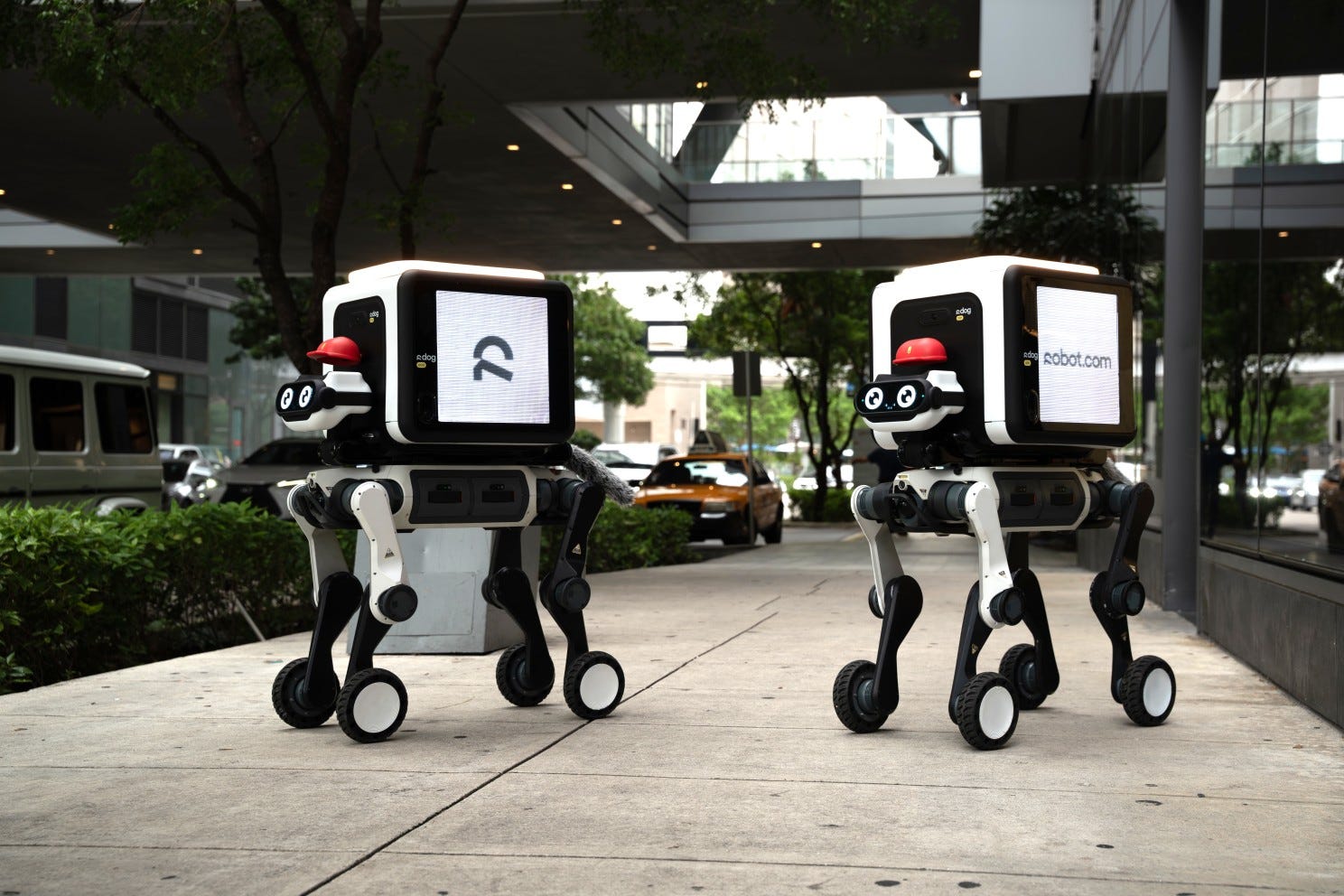
Then, in August, Robot.com unveiled R-Dog, a four-legged concept designed for the difficult “last 100 meters” of delivery, including stairs, curbs, thresholds and uneven terrain that can stop a wheeled robot. Commercial deployments are planned for 2027.
The different robots are tied together through REMI, Robot.com‘s fleet-management and orchestration platform. Chavez Cortes described it as the layer that allows the company to operate different robot types and connect them with its own autonomy systems, traditional robotics software and third-party robot foundation models.
One robot exposes the next problem
Perhaps the most interesting part of Robot.com‘s evolution is how solving one problem can reveal another.
At one golf-course deployment, R-Kiwi robots could deliver orders. But someone still had to load them.
That became the next automation problem.
Customers began asking whether Robot.com could automate that step too, helping drive the development of R-Noid. The company’s June launch materials describe one early R-Noid “Packer” deployment at a golf course handling on-site order operations.
It is a useful example of how Robot.com says it approaches robotics: deploy something, see where the bottleneck moves, and then decide whether another part of the workflow can be automated.
The company says it now has more than 500 robots deployed across the United States, Canada, Dubai and the broader MENA region, with more than 2.5 million tasks completed.
A solarpunk future
He described it as a future in which robots live alongside people “in a sustainable way,” while humans maintain their connection to nature and to one another.
“Robots are just one part of the picture,” he said.
That vision fits closely with something he said when Robot.com launched R-Noid this summer:
“The future of work isn’t fewer people. It’s people freed from the parts of the job that grind them down, doing more of what they’re good at.”
In our conversation, he put it even more personally:
“That’s the future that I want to live in.”
Part 2 of my conversation with Felipe Chavez Cortes runs Monday, October 12. We move from Robot.com‘s origin story to the harder question: what does it actually take to deploy robots in the real world?


